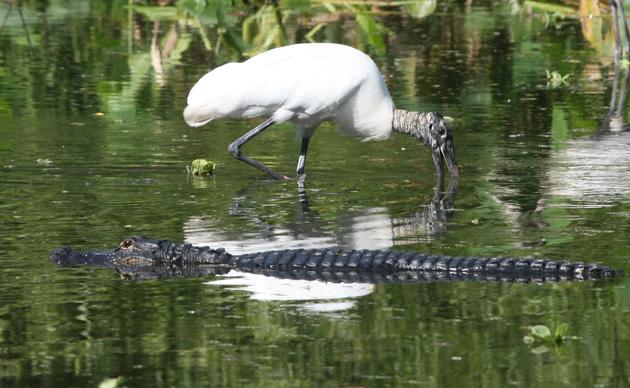
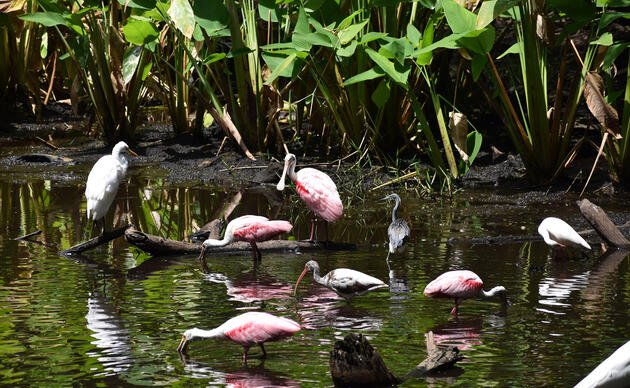
Wading birds feeding in an isolated wetland
Water levels are strategically monitored throughout Corkscrew Swamp Sanctuary using staff gauges and either analog or digital rainfall gauges. Hydrologic data are entered into a computer database where they can be statistically analyzed. Such data can be used to track water level fluctuations as a function of precipitation over time, and to document fluctuations & deviations from historical hydropatterns. The timing, volume, depth and distribution of water in South Florida have everything to do with the plant and animal communities the landscape can support. Florida has a distinct wet season typically starting in June and running through September. Hurricane season has been known to occasionally extend the rainy season into November.
Corkscrew Swamp, like the rest of South Florida, is very flat. It sits about 20 miles from the Gulf of Mexico but is only around 17 feet above sea level. During the rainy season, water fills up in the shallow localized depressions before spilling out in broad flat sheets to connect to adjacent wetlands. Eventually, a vast expanse of sheet flowing water gently makes its way from the top of the Corkscrew Swamp Ecosystem Watershed (CREW) marsh across Corkscrew Swamp southwest towards the Gulf of Mexico. This sheet of water carries with it fish and invertebrates which take advantage of the sheet flow to breed and feed in a mosaic of different types of wetlands. The water is constantly evaporating into the atmosphere, flowing towards the Gulf, being taken up by plants and soaking into the soil.
When the rain stops, these processes cause the water table to recede, eventually re-isolating the wetlands, starting with the shallowest ones first. Fish get trapped in the small pools and a diverse assortment of wading birds capitalizes on the concentrated fish which when adequate inspires nesting. This dry-down typically runs from October through May.
For more information on South Florida hydrology please click here.
Related
Corkscrew Watershed Science Forum
Partnering with our Federal, State, County and other neighbors to share the latest science on the ecology of our watershed.
How you can help, right now
Donate to Protect Corkscrew's Birds and Wetlands
Make a meaningful and lasting gift to protect Corkscrew Swamp Sanctuary's rare Everglades habitat.
Become a Member
Join an extraordinary and growing community of members dedicated to supporting the conservation of natural ecosystems throughout the Western Everglades.
Sign Up for the Corkscrew eNewsletter
Stay connected to Corkscrew Swamp. Sign up for our monthly online newsletter.